What Is a Pace Calculator?
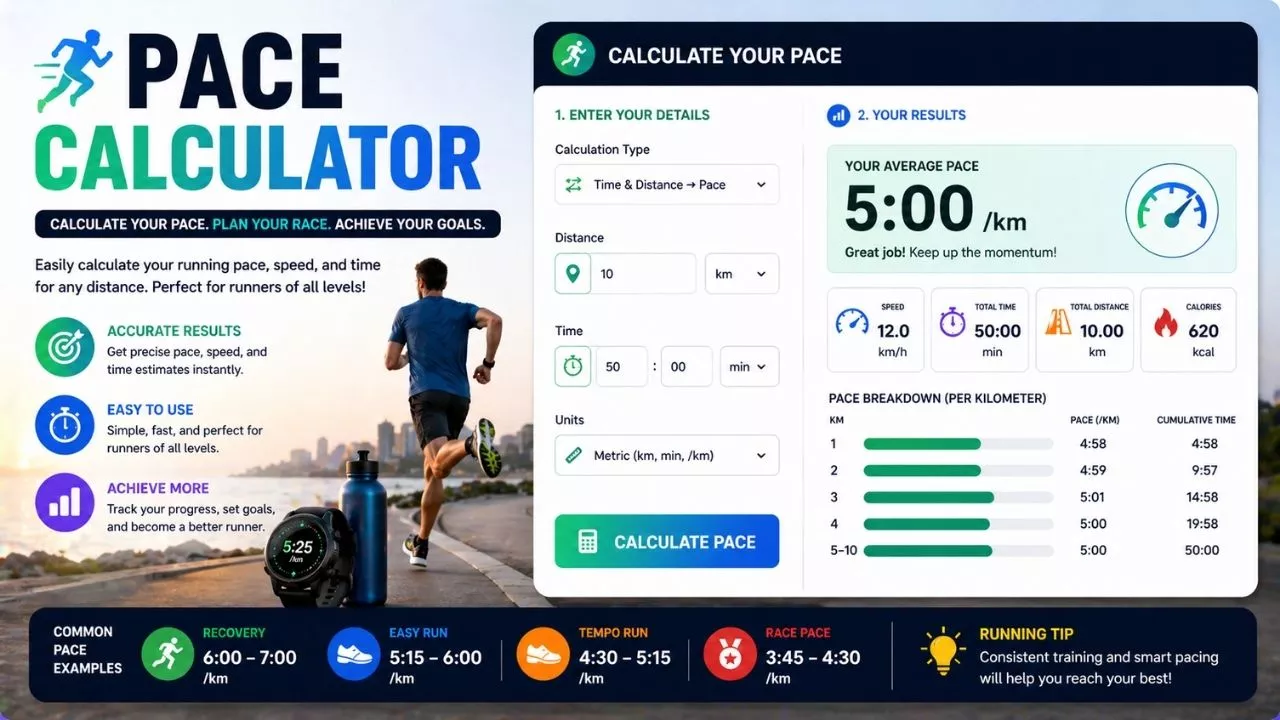
A pace calculator is a simple tool that helps you understand how fast you are moving over a certain distance. Instead of just telling you speed in miles per hour, it breaks things down into something more useful for activities like running, walking, or cycling. It shows how long it takes to cover one unit of distance, such as minutes per mile.
For example, if you run 3 miles in 30 minutes, your pace is 10 minutes per mile. That means every mile takes you about 10 minutes to complete. A pace calculator does this math for you instantly, saving time and avoiding mistakes.
People use pace calculators for many reasons. Runners use them to prepare for races. Walkers use them to track fitness progress. Cyclists use them to maintain steady effort during long rides. Even casual users find them helpful when trying to stay active or reach daily goals.
The beauty of a pace calculator is how easy it is to use. You usually enter three things: distance, time, and sometimes pace. The calculator then figures out the missing value. This makes it very flexible and helpful for different situations.
In the United States, where miles are commonly used, most pace calculators allow you to switch between miles and kilometers. This makes it convenient whether you are training locally or comparing results with international standards.
How a Pace Calculator Works
A pace calculator is based on a very simple idea. It uses the relationship between distance, time, and pace. If you know any two of these values, you can find the third.
The basic formula is:
Pace = Time ÷ Distance
For example, if you walk 2 miles in 40 minutes, your pace is:
40 ÷ 2 = 20 minutes per mile
This means each mile takes 20 minutes to complete.
If you want to find time instead, the formula changes slightly:
Time = Pace × Distance
So if your pace is 8 minutes per mile and you plan to run 5 miles:
8 × 5 = 40 minutes
That means it will take you about 40 minutes to finish.
Modern pace calculators do all this instantly. You just type in the numbers, and the result appears right away. Many tools also show splits, which tell you how long each mile or kilometer will take. This helps you stay consistent during workouts or races.
Some advanced calculators even adjust for elevation, terrain, or fatigue. While basic tools focus on simple math, these added features give a more realistic estimate of performance.
Understanding how the calculator works helps you trust the results and use them better. It also makes it easier to plan your fitness goals step by step.
Why Pace Matters in Fitness
Pace is one of the most important factors in any physical activity that involves distance. It tells you how efficiently you are moving and helps you control your effort.
If you go too fast at the start of a run, you may feel tired quickly and struggle to finish. On the other hand, if you go too slow, you may not challenge your body enough to improve. Finding the right pace helps you balance speed and endurance.
For runners in the United States, races like 5K, 10K, and marathons are very popular. Each race requires a different pacing strategy. A pace calculator helps you decide how fast you should run each mile to meet your target finish time.
For example, if your goal is to finish a 5K in 30 minutes, your pace needs to be around 9 minutes and 39 seconds per mile. Without a calculator, figuring this out can be confusing.
Pace also helps track progress. If you notice your pace improving over time, it means your fitness is getting better. Even small improvements can make a big difference in long distances.
In addition, pacing reduces the risk of injury. Sudden bursts of speed or uneven effort can strain muscles. A steady pace keeps your body moving smoothly and safely.
How to Use a Pace Calculator Step by Step
Using a pace calculator is straightforward and takes only a few seconds. You do not need any special skills or advanced knowledge.
First, decide what you want to calculate. Most tools allow you to find pace, time, or distance. Choose the option that matches your goal.
Next, enter the known values. For example:
- If you want to find pace, enter time and distance.
- If you want to find time, enter pace and distance.
- If you want to find distance, enter pace and time.
Make sure you use the correct units. In the United States, miles are more common, but some calculators also support kilometers.
After entering the values, click the calculate button. The result will appear instantly. Many calculators also provide additional details such as split times for each mile.
For example, if you plan to run 4 miles at a pace of 10 minutes per mile, the calculator will show a total time of 40 minutes. It may also display that each mile should take 10 minutes, helping you stay consistent.
To get the best results, try to use accurate numbers. Guessing can lead to incorrect pacing, especially for longer distances. If possible, use a stopwatch or fitness tracker to record your time.
Benefits of Using a Pace Calculator
A pace calculator offers many benefits, whether you are a beginner or an experienced athlete. It simplifies planning and helps you stay on track.
One major benefit is accuracy. Instead of estimating your pace, you get precise numbers. This is especially helpful when preparing for races where timing matters.
Another advantage is better goal setting. You can set realistic targets based on your current performance. For example, if you know your average pace, you can plan how to improve it gradually.
Pace calculators also save time. Instead of doing manual calculations, you get instant results. This makes it easier to adjust your plans quickly.
They also improve consistency. By knowing your pace, you can maintain a steady effort throughout your activity. This leads to better performance and less fatigue.
For people in the United States who follow structured training programs, pace calculators are often included in apps and fitness tools. They work well with smartwatches and running apps, making tracking even easier.
Finally, using a pace calculator builds confidence. When you know your numbers, you feel more prepared and in control of your performance.
Common Mistakes to Avoid
While pace calculators are easy to use, there are some common mistakes that can lead to incorrect results or poor performance.
One common mistake is using the wrong units. Mixing miles and kilometers can give misleading results. Always double-check your inputs before calculating.
Another mistake is relying on unrealistic goals. Setting a pace that is too fast can lead to exhaustion or injury. It is better to start with a comfortable pace and improve gradually.
Some people also ignore external factors. Weather, terrain, and elevation can affect your pace. Running uphill or in hot weather will naturally slow you down.
Inconsistent timing is another issue. If you do not measure your time accurately, your pace calculation will not be reliable. Using a stopwatch or fitness app can help avoid this.
Many users also forget to update their pace as they improve. As your fitness level changes, your pace will change too. Regular updates keep your training effective.
Lastly, focusing only on pace can be limiting. While it is important, it should be combined with other factors like heart rate, distance, and overall effort.
Pace Calculator for Different Activities
A pace calculator is not just for running. It can be used for many different activities, each with its own pacing style.
For walking, pace helps track daily activity and fitness levels. A comfortable walking pace is usually between 15 to 20 minutes per mile, depending on the individual.
Cyclists use pace calculators differently. Instead of minutes per mile, they often look at speed in miles per hour. However, pace can still be useful for planning long rides.
Swimmers also use pace calculators. In swimming, pace is often measured per 100 meters or yards. This helps swimmers maintain a steady rhythm in the water.
Hikers benefit from pace calculators when planning trails. Knowing how long it takes to cover a certain distance helps with safety and time management.
Even in team sports, pacing plays a role. Athletes need to manage their energy throughout the game to perform well.
In the United States, where outdoor activities are popular, pace calculators are widely used across different sports and fitness routines. Their flexibility makes them useful for almost anyone.
Tips to Improve Your Pace
Improving your pace takes time and consistent effort, but small changes can lead to big results.
Start by setting clear goals. Decide what pace you want to achieve and create a plan to reach it. Make sure your goal is realistic and achievable.
Practice regularly. Consistency is key when it comes to improving performance. Even short sessions can make a difference over time.
Focus on your form. Proper posture and movement can help you move more efficiently and reduce fatigue. This applies to running, walking, and cycling.
Include different types of workouts. Interval training, where you alternate between fast and slow speeds, can help improve both speed and endurance.
Rest and recovery are just as important. Overtraining can lead to injuries and slow progress. Give your body enough time to recover.
Track your progress using a pace calculator or fitness app. Seeing your improvement can keep you motivated and help you adjust your plan when needed.
Finally, stay patient. Improving pace does not happen overnight, but with steady effort, you will see results.