What is weight calculator?
A weight calculator is a helpful tool that tells you how much you weigh or what your weight should be based on certain details like your height, age, and gender. It is commonly used by people who want to stay healthy, track their fitness progress, or simply learn more about their body. These calculators can be found online, in fitness apps, or even built into smart devices.
Weight calculators are not just about numbers. They help you understand your body better and give you a general idea of where you stand in terms of health. For example, someone who wants to gain muscle or lose fat can use a weight calculator to set a goal and track progress over time. It is like having a simple guide that helps you make smarter choices.
In the United States, many people use weight calculators as part of their daily health routine. Doctors, fitness trainers, and nutrition experts often recommend them as a starting point. They are easy to use and do not require any special knowledge.
Think of a weight calculator like a measuring tape for your health. It gives you a number, but that number can tell a bigger story about your lifestyle. When used correctly, it can help you make better decisions about food, exercise, and overall wellness.
How a Weight Calculator Works
A weight calculator uses basic information to give you results. Most calculators ask for your height, current weight, age, and sometimes your gender. Some advanced tools may also ask about your activity level or body type.
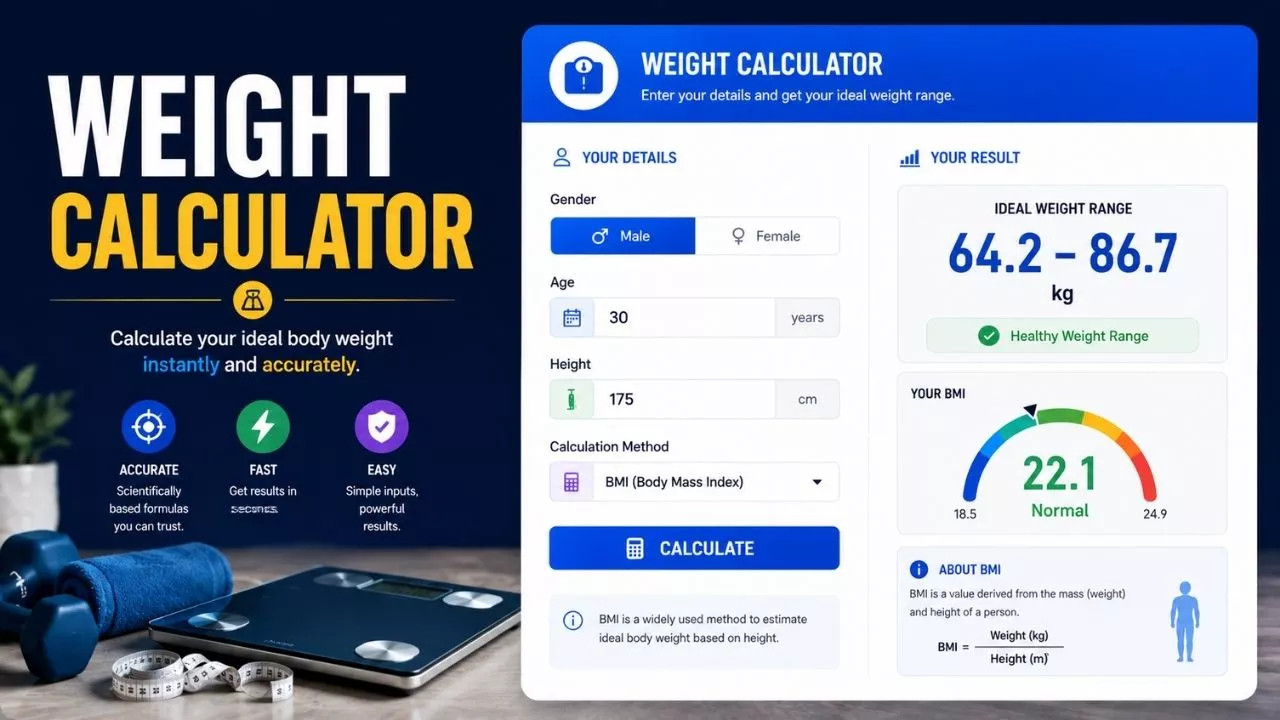
Once you enter this information, the calculator uses a formula to estimate your ideal weight or check if your current weight falls within a healthy range. One of the most common formulas used is the Body Mass Index, also known as BMI. It compares your weight to your height to give a number that falls into categories like underweight, normal, overweight, or obese.
The calculation itself is quick and simple. For example, BMI is calculated using the formula:
This formula gives a general idea of body fat, but it does not tell the whole story. For instance, someone who lifts weights might have a higher BMI because of muscle, not fat.
Some calculators go beyond BMI and include things like body fat percentage or ideal weight ranges. These extra details make the results more useful.
In simple terms, a weight calculator takes your basic details and turns them into helpful information. It saves time and makes it easier to understand where you stand without doing complex math.
Why Weight Matters for Health
Your weight plays an important role in your overall health. It affects how your body functions, how much energy you have, and even how you feel day to day. Maintaining a healthy weight can reduce the risk of many health problems.
When your weight is too high, it can lead to issues like heart disease, diabetes, and high blood pressure. On the other hand, being underweight can also be a problem. It may weaken your immune system, make you feel tired, and affect growth and development.
A weight calculator helps you understand if your weight is in a healthy range. This is important because small changes can make a big difference over time. For example, losing just a few pounds can improve your energy levels and reduce stress on your joints.
In the United States, many health programs focus on maintaining a balanced weight. Schools, gyms, and healthcare providers often encourage people to stay active and eat well. Weight calculators are often part of these programs because they are easy to use and give quick results.
It is important to remember that weight is just one part of health. Other factors like diet, exercise, sleep, and mental well-being also matter. A weight calculator is a helpful tool, but it should be used along with healthy habits.
Types of Weight Calculators
There are different types of weight calculators, and each one serves a specific purpose. Understanding these types can help you choose the right one for your needs.
The most common type is the BMI calculator. It is simple and widely used. It gives a quick estimate of whether your weight is in a healthy range. However, it does not consider muscle mass or body composition.
Another type is the ideal body weight calculator. This tool estimates what your weight should be based on your height and gender. It is often used as a goal-setting tool.
There are also body fat calculators. These are more advanced and try to estimate how much of your body is fat compared to muscle. These calculators may use additional measurements like waist size.
Some calculators focus on specific groups, such as children or athletes. These tools use different formulas because body needs can vary depending on age or activity level.
Fitness apps often include multiple calculators in one place. This allows users to track weight, calories, and other health factors together.
Choosing the right calculator depends on your goal. If you want a quick check, BMI is enough. If you want detailed insights, a body fat or ideal weight calculator may be better.
Benefits of Using a Weight Calculator
Using a weight calculator can make it easier to stay on track with your health goals. One of the biggest benefits is that it gives you clear and quick results. You do not have to guess if you are in a healthy range.
Another benefit is motivation. Seeing your numbers can encourage you to make better choices. For example, if you notice your weight is higher than expected, you might decide to exercise more or eat healthier foods.
Weight calculators also help with goal setting. Instead of having a vague idea like “I want to lose weight,” you can set a specific target. This makes it easier to track progress and stay focused.
They are also useful for tracking changes over time. By checking your weight regularly, you can see if your habits are working. This helps you adjust your routine if needed.
For families, weight calculators can be a simple way to teach healthy habits. Parents can use them to guide children in understanding the importance of balanced eating and physical activity.
Overall, a weight calculator is a simple but powerful tool. It helps turn information into action, making it easier to take control of your health.
Limitations You Should Know
While weight calculators are useful, they are not perfect. It is important to understand their limitations so you do not rely on them too much.
One major limitation is that many calculators use general formulas. These formulas may not fit everyone. For example, athletes with high muscle mass may appear overweight even if they are very healthy.
Another limitation is that calculators do not consider all factors. Things like bone density, genetics, and body shape are not included in most calculations. This means the results are only estimates.
Weight can also change due to temporary factors like water retention or recent meals. This can affect the accuracy of the results.
Some people may feel stressed or worried if their numbers are not in the expected range. It is important to remember that these numbers are just a guide, not a final judgment.
For the best results, weight calculators should be used along with other tools and advice. Talking to a doctor or a fitness expert can give you a more complete picture.
Understanding these limits helps you use weight calculators wisely and avoid common mistakes.
Tips for Using a Weight Calculator Effectively
To get the most out of a weight calculator, it is important to use it correctly. Start by entering accurate information. Even small errors in height or weight can change the results.
Try to measure your weight at the same time each day. Morning is often the best time because your body is more stable after sleep. This helps you track changes more accurately.
Do not check your weight too often. Daily changes can be small and confusing. Checking once or twice a week is usually enough.
Use the calculator as a guide, not a rule. Combine it with healthy habits like regular exercise, balanced meals, and enough sleep.
Set realistic goals. Instead of aiming for big changes quickly, focus on small improvements. This is easier to maintain and better for your health.
Keep track of your progress over time. Writing down your results or using an app can help you see patterns and stay motivated.
If you are unsure about your results, consider asking a healthcare professional. They can help you understand what the numbers mean for your body.
Using a weight calculator the right way can make it a valuable part of your health routine.
Final Thoughts
Weight calculators are simple tools that can provide useful insights into your health. They take basic information and turn it into something meaningful, helping you understand your body better.
They are easy to use, widely available, and helpful for setting goals and tracking progress. Whether you are trying to lose weight, gain muscle, or maintain your current condition, these tools can guide you in the right direction.
At the same time, it is important to use them wisely. They are not perfect and should not be the only measure of health. Combining them with good habits and professional advice gives the best results.
In today’s fast-paced world, having quick and reliable tools can make a big difference. A weight calculator is one such tool that can support your journey toward a healthier lifestyle.
By using it regularly and understanding its purpose, you can make smarter decisions and stay on track with your health goals.