What Is a Carbohydrate Calculator?
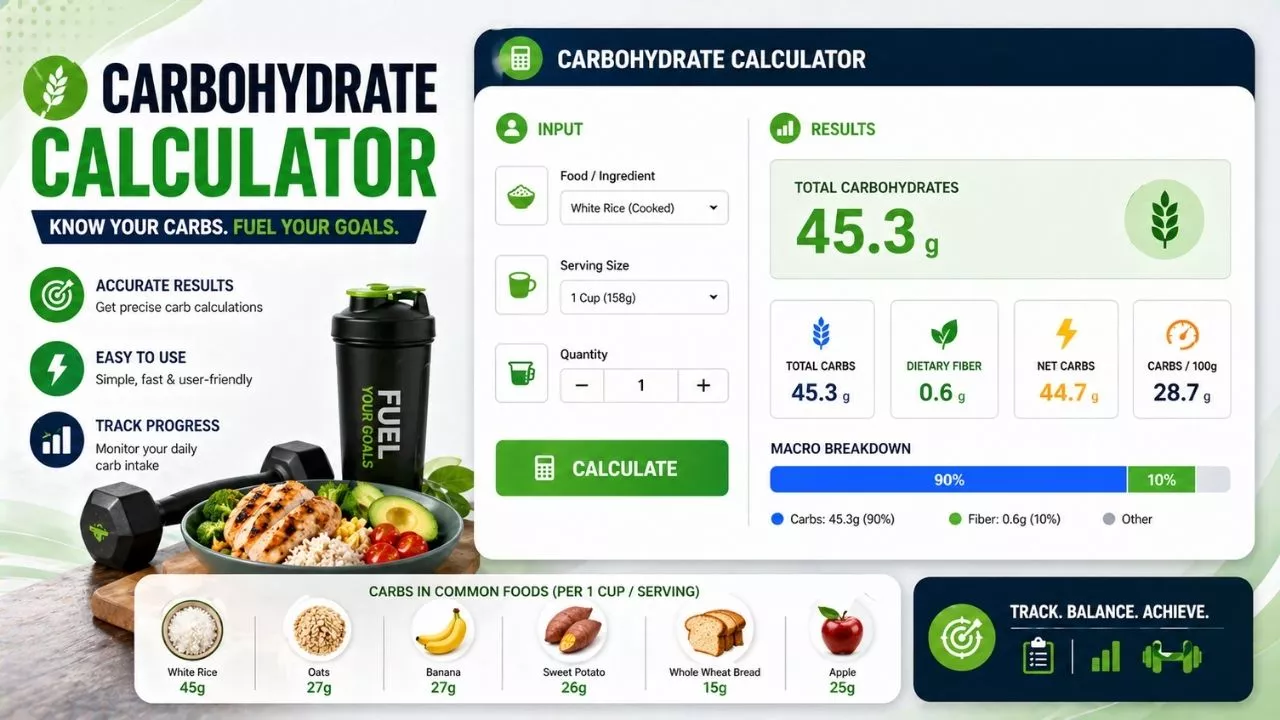
A carbohydrate calculator is a tool that helps you estimate how many carbs you should eat each day. Carbohydrates, often called carbs, are one of the three main nutrients your body needs, along with protein and fat. They are your body’s primary source of energy, especially for the brain and muscles.
This calculator uses details like your age, weight, height, activity level, and health goals to suggest how many carbs you should include in your daily meals. For example, someone who exercises regularly may need more carbs than someone who has a mostly sedentary lifestyle.
Carbohydrate calculators are especially useful for people trying to manage their weight, improve athletic performance, or control blood sugar levels. Many people with diabetes rely on carb counting to keep their blood glucose stable.
The tool works by first estimating your daily calorie needs. Then it calculates what percentage of those calories should come from carbohydrates. Since one gram of carbohydrate provides about 4 calories, it converts that percentage into grams.
Using a carbohydrate calculator does not mean you have to follow it perfectly every day. Instead, it gives you a helpful starting point. From there, you can adjust based on how your body feels and responds. This makes it easier to build a balanced eating plan that fits your lifestyle.
Why Carbohydrates Matter for Your Body
Carbohydrates play a key role in keeping your body functioning properly. When you eat carbs, your body breaks them down into glucose, which is a type of sugar in your blood. This glucose is used by your cells to produce energy.
Your brain depends heavily on glucose to stay alert and focused. Without enough carbs, you may feel tired, dizzy, or unable to concentrate. This is why completely cutting out carbohydrates is not usually recommended for most people.
Carbs also support physical activity. Whether you are walking, lifting weights, or playing sports, your muscles rely on stored carbohydrates, called glycogen, for fuel. When these stores run low, performance can drop, and fatigue sets in.
There are different types of carbohydrates, and they affect your body in different ways:
- Simple carbohydrates are found in sugar, candy, and soda. They provide quick energy but do not last long.
- Complex carbohydrates are found in foods like whole grains, beans, and vegetables. They release energy more slowly and keep you full longer.
- Fiber is a special type of carbohydrate that helps digestion and keeps your gut healthy.
A carbohydrate calculator helps you balance these types of carbs so you get enough energy without overloading on sugar. It encourages smarter food choices rather than just limiting intake.
How a Carbohydrate Calculator Works
A carbohydrate calculator starts by estimating how many calories your body needs each day. This is based on factors such as your age, gender, height, weight, and activity level. Someone who works out regularly will need more calories than someone who spends most of the day sitting.
Once your daily calorie needs are calculated, the tool determines what portion of those calories should come from carbohydrates. Most general guidelines suggest that about 45 percent to 65 percent of your daily calories can come from carbs.
To convert calories into grams of carbohydrates, the calculator uses a simple rule. Each gram of carbohydrate provides 4 calories. For example, if your daily carb target is 2000 calories and you aim for 50 percent from carbs, that means 1000 calories from carbs. Dividing 1000 by 4 gives you 250 grams of carbohydrates per day.
Some advanced calculators also adjust recommendations based on specific goals. For example:
- Weight loss plans may suggest a slightly lower carb intake.
- Muscle-building plans may increase carbs for energy and recovery.
- Diabetes management tools may focus on steady carb intake throughout the day.
Many calculators also break down your daily carb target into meals and snacks. This makes it easier to spread your intake evenly and avoid large spikes in blood sugar.
Who Should Use a Carbohydrate Calculator?
A carbohydrate calculator can be useful for many different people, not just athletes or those on strict diets. It provides guidance for anyone who wants to understand their eating habits better.
People trying to lose weight often use these calculators to control calorie intake. By knowing how many carbs to eat, they can avoid overeating and make healthier food choices. It also helps prevent extreme dieting, which can be hard to maintain.
Athletes and active individuals use carbohydrate calculators to fuel their performance. Carbs are essential for endurance and strength, so getting the right amount can improve energy levels during workouts and speed up recovery afterward.
People with diabetes benefit greatly from carb tracking. Managing carbohydrate intake helps control blood sugar levels and reduces the risk of complications. A calculator can make this process easier and more accurate.
Even those who simply want to eat healthier can use a carbohydrate calculator. It helps you become more aware of what you eat and encourages balanced meals.
Parents can also use it to guide family meal planning, ensuring children and teens get enough energy for school and activities without consuming too much sugar.
Overall, it is a flexible tool that can be adapted to different lifestyles and goals, making it widely useful.
Types of Carbohydrates You Should Know
Not all carbohydrates are created equal, and understanding the difference is important when using a carbohydrate calculator. Choosing the right types of carbs can improve your energy, digestion, and overall health.
Simple carbohydrates are found in foods like white bread, pastries, candy, and sugary drinks. These are quickly digested and can cause rapid spikes in blood sugar. While they can provide quick energy, too much can lead to crashes and increased hunger.
Complex carbohydrates are found in whole grains, brown rice, oats, beans, and vegetables. These take longer to digest, providing steady energy over time. They also contain important nutrients like vitamins and minerals.
Fiber is another important type of carbohydrate. It is found in fruits, vegetables, whole grains, and legumes. Fiber helps with digestion, keeps you full, and supports heart health. It does not raise blood sugar in the same way as other carbs.
When using a carbohydrate calculator, it is not just about hitting a number. It is also about choosing better sources of carbs. For example, 50 grams of carbs from vegetables and whole grains will benefit your body more than 50 grams from sugary snacks.
A balanced approach includes a mix of complex carbs and fiber-rich foods while limiting added sugars. This helps maintain steady energy levels and supports long-term health.
Benefits of Using a Carbohydrate Calculator
Using a carbohydrate calculator offers several practical benefits that can improve your daily life and long-term health. One of the biggest advantages is better portion control. When you know how many carbs you need, it becomes easier to avoid overeating.
Another benefit is improved energy levels. Eating the right amount of carbohydrates helps keep your energy steady throughout the day. You are less likely to experience sudden crashes or feel sluggish.
A carbohydrate calculator also supports weight management. By aligning your carb intake with your calorie needs, you can create a balanced plan that supports either weight loss or maintenance without extreme restrictions.
For people managing health conditions like diabetes, the calculator provides structure. It helps track carb intake accurately, making it easier to maintain stable blood sugar levels.
It also encourages mindful eating. Instead of guessing or following trends, you make informed decisions based on your body’s needs. Over time, this builds healthier habits.
Another advantage is flexibility. You do not have to eliminate your favorite foods. Instead, you learn how to include them in the right portions.
Finally, it simplifies meal planning. Knowing your daily carb target allows you to divide it across meals, making grocery shopping and cooking more organized and less stressful.
Tips for Using a Carbohydrate Calculator Effectively
To get the most out of a carbohydrate calculator, it is important to use it correctly and consistently. Start by entering accurate information. Small errors in your weight, height, or activity level can affect your results.
Next, treat the calculator as a guide rather than a strict rule. Your body may respond differently, so it is okay to adjust your carb intake based on how you feel and your progress.
Pay attention to food quality, not just quantity. Focus on whole, nutrient-rich foods like fruits, vegetables, whole grains, and legumes. Limit processed foods that are high in added sugars.
Track your meals for a few days to understand your current eating habits. This helps you see where changes are needed and makes the calculator more effective.
Stay consistent with your eating pattern. Spreading your carbohydrate intake evenly throughout the day can help maintain steady energy and avoid spikes in blood sugar.
If you have specific health conditions, consider consulting a healthcare professional or dietitian. They can help you interpret your results and create a plan that suits your needs.
Finally, be patient. Changes in diet take time to show results. Stick with your plan, make small adjustments, and focus on long-term habits rather than quick fixes.
Common Mistakes to Avoid
While a carbohydrate calculator is helpful, some common mistakes can reduce its effectiveness. One mistake is focusing only on numbers and ignoring food quality. Not all carbs are equal, so choosing healthier options matters.
Another mistake is setting unrealistic goals. Cutting carbs too drastically can lead to low energy, cravings, and difficulty maintaining your plan. Balance is key.
Some people forget to adjust their intake based on activity level. On more active days, your body may need more carbohydrates, while less active days may require fewer.
Ignoring portion sizes is another issue. Even healthy foods can add up if eaten in large amounts. Measuring portions can help keep your intake on track.
Skipping meals can also disrupt your carb balance. This may lead to overeating later in the day and unstable energy levels.
Finally, relying only on the calculator without listening to your body can be limiting. Hunger, energy, and overall well-being are important signals that should guide your choices.
By avoiding these mistakes, you can use a carbohydrate calculator more effectively and create a sustainable, healthy eating pattern that works for you.