The Body Mass Index (BMI) Calculator helps you figure out your BMI score and what it means for your weight status, factoring in your age for a more accurate picture. Switch to the “Metric Units” tab if you’re using kilograms and centimeters (common worldwide), or pick “Other Units” to toggle between US customary units like pounds and inches or metric ones.
BMI Calculator
Body Mass Index — check your healthy weight range
—
—BMI Categories — WHO Classification (Adults)
| Classification | BMI Range (kg/m²) |
|---|---|
| Severe Thinness | < 16 |
| Moderate Thinness | 16 – 17 |
| Mild Thinness | 17 – 18.5 |
| Normal Weight | 18.5 – 25 |
| Overweight | 25 – 30 |
| Obese Class I | 30 – 35 |
| Obese Class II | 35 – 40 |
| Obese Class III | > 40 |
Bonus: It also spits out your Ponderal Index, a related measure that weighs height a bit differently, for extra insight.
What is BMI?

Body mass index, or BMI, is one tool used to determine whether a person is at a healthy weight. BMI is often used to help determine if your weight might put you at risk for health problems such as heart disease, diabetes, and cancer.
Your weight and height are used to find out your BMI number. In general, the higher the number, the more body fat a person has.
BMI is used mainly to define different weight groups in adults aged 20 years or older.
- Underweight: BMI is less than 18.5
- Normal weight: BMI is 18.5 to 24.9
- Overweight: BMI is 25 to 29.9
- Obesity: BMI is 30 or more
In adults, BMI is calculated the same way for both men and women. There are several ways to find your BMI. (See below for information about how to calculate BMI in children and teens.)
Limitations and concerns about the use of BMI
BMI gives a good estimate of total body fat for most people, but it doesn’t work well for everybody. There are other things to think about when judging how much someone should weigh. For example:
- Bodybuilders or other very muscular people can have a high BMI because of their muscle mass, even though they’re not necessarily in the overweight range for BMI.
- BMI can also underestimate body fat in people who have lost muscle mass, such as some older people.
A person with a high BMI should be evaluated by a health care provider. The provider might use other factors such as skinfold thickness (a measure of body fat), waist size, evaluations of diet and family health problems, and other factors to find out if someone’s weight might pose health risks.
BMI for Adults
BMI, or Body Mass Index, is a quick way to gauge if your weight is healthy for your height. The World Health Organization (WHO) sets the standard for adults (ages 20+), and it applies to both men and women.
You calculate it by dividing your weight in kilograms by your height in meters squared (e.g., a 70kg person who’s 1.7m tall has a BMI of about 24.2). It’s not perfect; it doesn’t factor in muscle mass or body fat, but it’s a solid starting point.
Here’s the WHO’s breakdown of BMI categories, with what they mean in everyday terms:
- Severe Thinness: Below 16
Very low weight; often linked to health risks like weakened immunity or nutrient deficiencies. (Think: someone who looks extremely underweight.) - Moderate Thinness: 16–17
Still underweight; may need medical advice to gain weight safely. - Mild Thinness: 17–18.5
On the lighter side, monitor diet and energy levels. - Normal (Healthy Weight): 18.5–25
The ideal range for most people balances energy, heart health, and mobility. (Example: 55–75kg for someone 165cm tall.) - Overweight: 25–30
A bit above ideal; small lifestyle tweaks like more walking can help prevent issues like diabetes. - Obese Class I: 30–35
Higher obesity levels increase risks for high blood pressure and joint strain. - Obese Class II: 35–40
Serious obesity often needs professional support, such as dietitians or doctors. - Obese Class III (Severe Obesity): Over 40
Very high risk for conditions like heart disease; medical intervention is key.
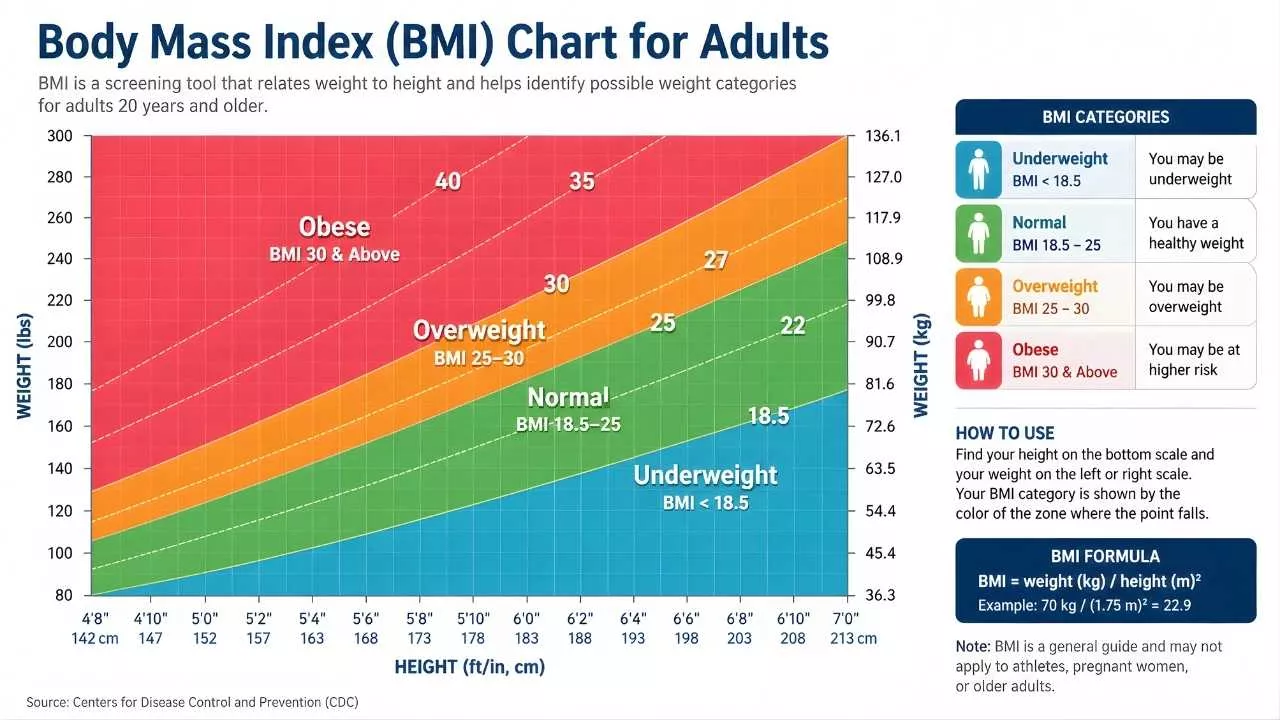
BMI chart for adults
This is a graph of BMI categories based on the World Health Organization data. The area where green shades cover the “Normal” zone (18.5–25), yellow signals “Overweight” (25–30), and reds mark obesity levels.
Gray lines weave through, showing exact BMI for heights from 1.5m to 2m and weights from 40kg up. For instance, at 170cm, a 25 BMI hits around 72kg right at the overweight line.
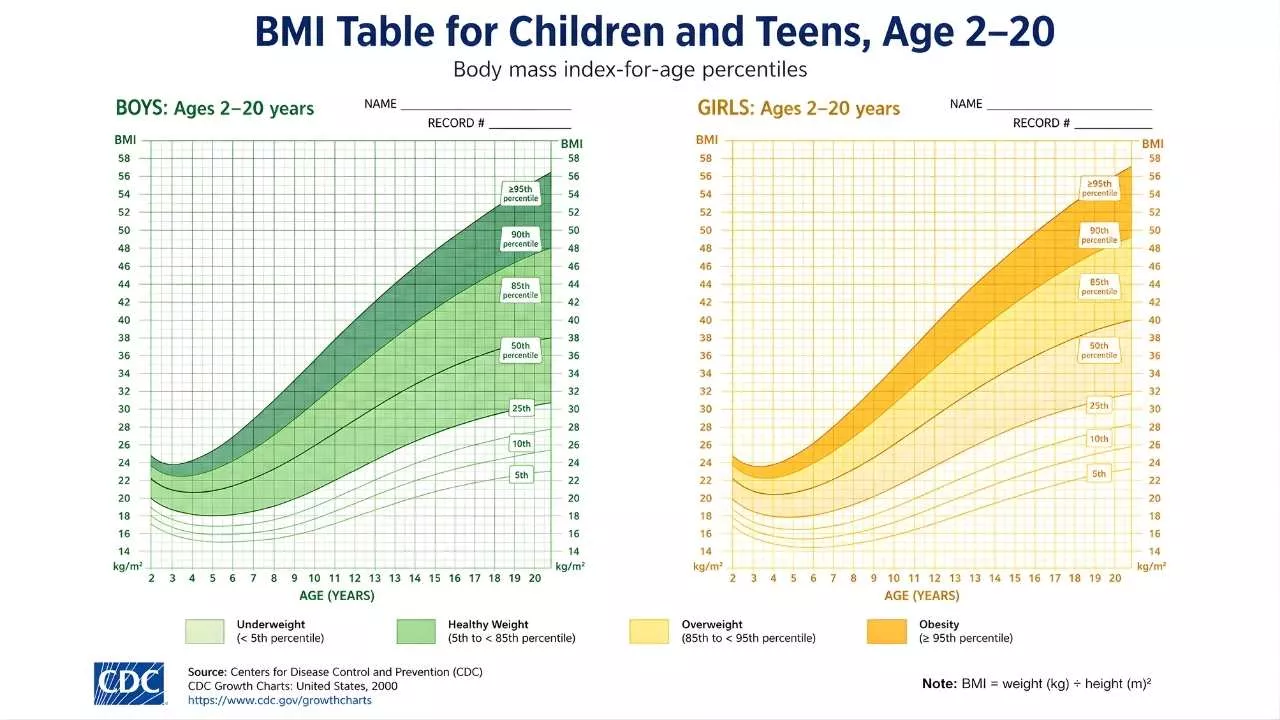
BMI table for children and teens, age 2-20
The Centers for Disease Control and Prevention (CDC) recommends BMI categorization for children and teens between the ages of 2 and 20.
Health Risks of Carrying Extra Weight
Being overweight (typically a BMI over 25) ramps up your chances for some tough health issues, per the CDC and other experts. It’s not just about looking extra fat, especially around the belly; it stresses your body in sneaky ways. Here’s the rundown:
- High blood pressure (hypertension): Extra weight makes your heart work overtime, straining arteries like a pump pushing through mud.
- Unhealthy cholesterol and triglycerides: You get more “bad” LDL cholesterol (which clogs arteries), less “good” HDL (your cleanup crew), and sky-high triglycerides (fats in your blood that fuel heart trouble). Think of it as gunk building up in your pipes.
- Type 2 diabetes: Fat cells mess with insulin, the hormone that controls blood sugar, leading to lifelong management with meds or insulin shots.
- Heart disease and stroke: Plaque from bad cholesterol narrows arteries, raising the odds of heart attacks (blocked blood to the heart) or strokes (brain blockages). Overweight folks are 2-3 times more likely.
- Gallbladder problems, like gallstones, from cholesterol buildup in bile, are painful and sometimes need surgery.
- Osteoarthritis: Extra pounds grind down joint cartilage, especially knees and hips, turning simple walks into agony.
- Sleep apnea: Fat around the neck blocks airways, causing snoring, daytime fatigue, and even car accidents from poor sleep.
- Certain cancers: Higher risk for breast, colon, endometrial, kidney, and liver cancers-possibly from inflammation and hormone changes.
- Mental health struggles: More depression, anxiety, and low self-esteem, often from body image stress or inflammation affecting the brain.
- Daily aches and limits: Back pain, trouble climbing stairs, or even getting dressed, quality of life takes a hit.
- Shorter lifespan: Overall, a 20-40% higher death risk from all causes compared to healthy-weight people.
The good news? Losing just 5-10% of your body weight through balanced eating, walking 30 minutes daily, and strength training can slash these risks big time. Aim for a BMI under 25, but chat with your doctor first; they’ll tailor advice to you.
Health Risks of Being Underweight
On the flip side, being underweight (BMI under 18.5) isn’t healthy either; it starves your body of what it needs to thrive. Here’s why it can backfire:
- Malnutrition and deficiencies: Low calories mean missing vitamins (like B12 or D) and minerals, leading to anemia (tiredness from weak oxygen transport) or fragile skin/hair.
- Osteoporosis: Weak bones from poor calcium intake raise fracture risk; imagine your skeleton turning brittle like dry twigs.
- Weakened immunity: Fewer resources for your defenses, so more frequent colds, infections, or slow healing.
- Growth delays in kids/teens: Stunted height, delayed puberty, or learning issues from nutrient shortages during key development windows.
- Women’s reproductive problems: Hormonal chaos can stop periods (amenorrhea), cause infertility, or spike early miscarriage rates by 20-30%.
- Surgery risks: Thin bodies have less resilience, with higher chances of poor wound healing or infections post-op.
- Higher death risk: Like with overweight, underweight increases mortality by 20-30% from frailty or hidden issues.
Sometimes it’s a red flag for disorders like anorexia or hyperthyroidism. If you’re underweight without trying (e.g., from illness or stress), see a doctor ASAP they can check for causes and suggest nutrient-rich foods like nuts, avocados, and smoothies to safely gain weight.
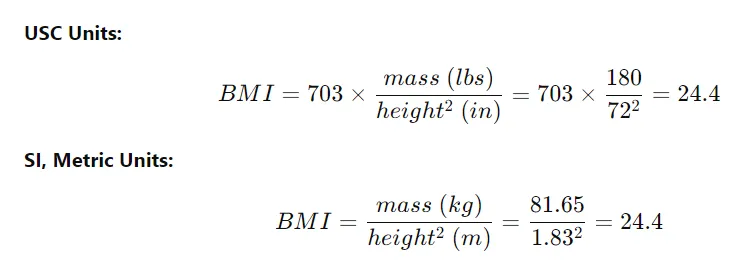
BMI formula
Below are the equations used for calculating BMI in the International System of Units (SI) and the US customary system (USC) using a 6′, 180-pound individual as an example:
Why BMI Isn’t Perfect
BMI is a handy tool for gauging if your weight is in a healthy range, but it’s far from flawless. It basically just looks at your height and weight to spit out a number; it can’t tell muscle from fat, or account for differences in body build. That’s why it’s smartest to pair it with other checks, like waist measurements or body fat scans, instead of relying on it alone.
For Adults
BMI measures total body weight, not fat specifically, so it gets tripped up by things like age, sex, ethnicity, muscle bulk, fat placement, and how active you are. Picture this: a sedentary 60-year-old with a “normal” BMI might actually be packing extra belly fat, which raises health risks like diabetes.
On the flip side, a ripped 25-year-old weightlifter could clock in as “overweight” because muscle weighs more than fat, think NFL players or gymnasts who are super fit despite high BMIs. Per health experts like the CDC:
- Folks over 60 often carry more fat at the same BMI as younger people.
- Women usually have a higher body fat percentage than men with matching BMIs.
- Super-muscular types, like pro athletes, skew higher due to all that dense muscle.
For Kids and Teens
The same issues pop up here, but puberty adds another layer, growing spurts and hormone changes mess with height, muscle, and fat. BMI works okay for spotting obesity in kids (where extra fat is the main culprit), but for “overweight” ones, it might just reflect more muscle or bone growth.
Skinny kids? Their low BMI could mean less fat or less muscle/water weight. Tools like growth charts help fill in the gaps.
Bottom line: BMI nails it for about 90-95% of us regular folks. Use it as a starting point, not the final word, alongside diet, exercise habits, and maybe a doctor’s input.