Calories Burned Calculator
Estimate calories burned during any exercise using MET science — by duration or distance.
Body & Duration
Select Activity
Body & Distance
What Is a Calories Burned Calculator?
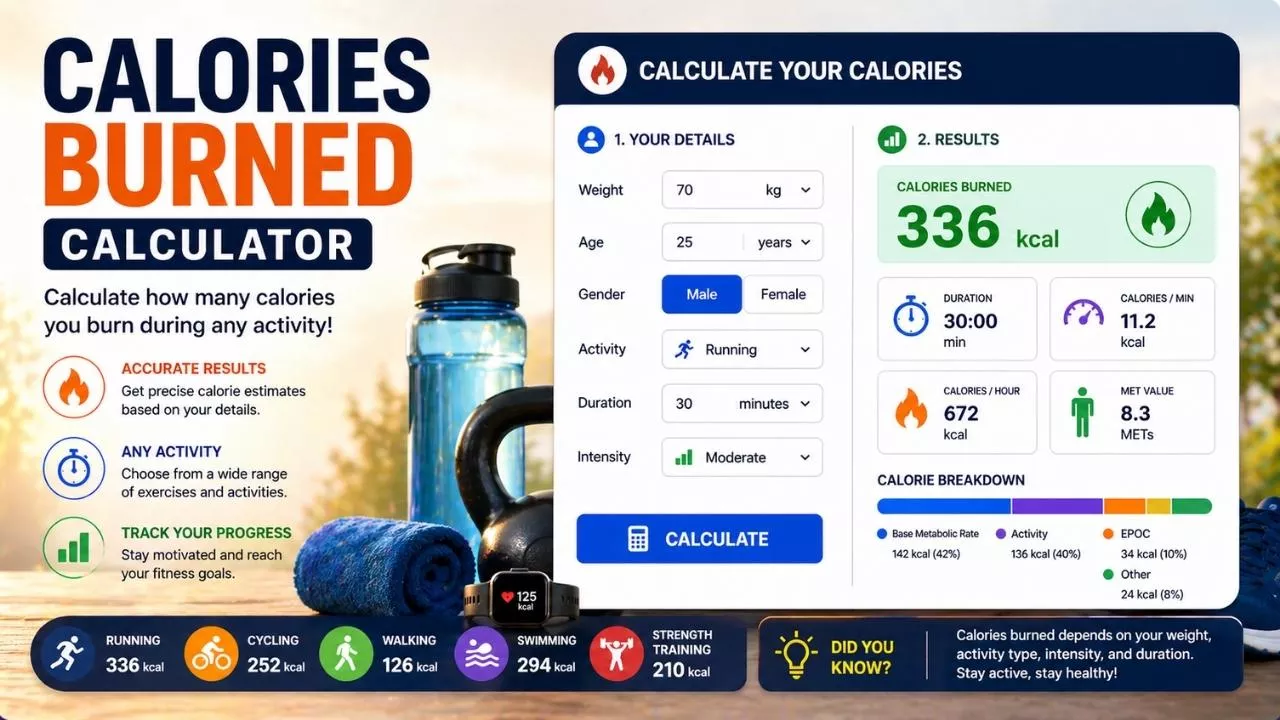
A calories burned calculator is a tool that helps you estimate how many calories your body uses during different activities. Every time you move, whether you are walking, running, cleaning your room, or even sleeping, your body burns energy.
This energy is measured in calories. The calculator takes information like your weight, age, activity type, and time spent doing that activity to give you an estimate of how many calories you burn.
Think of your body like a car. A car needs fuel to run, and your body needs calories. The more intense the activity, the more fuel your body uses. For example, sitting and watching TV burns fewer calories than playing basketball or swimming.
These calculators are often available online and are easy to use. You simply enter your details, choose an activity, and get a result in seconds. While the number is not always exact, it gives a helpful idea of how active you are and how much energy you are using.
Understanding calorie burn is important for people who want to stay healthy, manage their weight, or improve their fitness. It helps you balance how much you eat with how much you move. Once you understand this balance, you can make better choices about your daily habits and lifestyle.
How Calories Work in the Body
Calories are units of energy that your body uses to function. Every action your body performs, from breathing to running, requires energy. When you eat food, your body breaks it down and converts it into calories that power your muscles and organs.
Your body uses calories in three main ways. First, it supports basic functions like breathing, digestion, and keeping your heart beating. This is called your resting energy use. Second, it fuels physical activity such as walking, exercising, or doing chores. Third, it helps process the food you eat, which also requires energy.
The number of calories you burn each day depends on several factors. These include your age, weight, height, gender, and how active you are. For example, a person who exercises regularly will burn more calories than someone who spends most of the day sitting.
If you consume more calories than your body needs, the extra energy is stored as fat. If you burn more calories than you consume, your body uses stored fat for energy, which can lead to weight loss. This is why understanding calorie balance is so important.
A calories burned calculator helps you estimate the second part, which is how many calories you use during activities. When combined with what you eat, it gives you a clearer picture of your overall energy balance.
How a Calories Burned Calculator Works
A calories burned calculator uses formulas based on scientific research to estimate energy use. One common method involves something called MET, which stands for Metabolic Equivalent of Task. This value shows how much energy an activity uses compared to resting.
Each activity has a MET value. For example, sitting quietly has a low MET value, while running or jumping rope has a high MET value. The calculator multiplies this value by your body weight and the time you spend doing the activity to estimate calories burned.
Here is a simple example. If a person weighs 150 pounds and goes for a brisk walk for 30 minutes, the calculator uses a standard MET value for walking to estimate how many calories are burned. The result might show that the person burned around 120 to 150 calories during that time.
Different calculators may give slightly different results because they use different formulas or assumptions. However, most are accurate enough to provide a helpful estimate.
It is important to remember that these numbers are not exact. Your body is unique, and factors like metabolism, fitness level, and even temperature can affect how many calories you burn. Still, these tools are very useful for tracking progress and setting goals.
Benefits of Using a Calories Burned Calculator
Using a calories burned calculator can make a big difference in how you understand your health and fitness. One of the biggest benefits is awareness. Many people do not realize how much or how little they move during the day. Seeing actual numbers can help you understand your activity level better.
Another benefit is goal setting. If you want to lose weight, gain muscle, or maintain your current weight, knowing how many calories you burn can guide your decisions.
For example, if your goal is to lose weight, you might aim to burn more calories through exercise while also managing your food intake.
These calculators also help with planning workouts. If you know how many calories different activities burn, you can choose exercises that match your goals. For example, if you want a quick, high calorie burn, you might choose running or cycling instead of walking.
They can also keep you motivated. Watching your calorie burn increase over time can be encouraging and help you stay consistent. Even small improvements can feel rewarding when you see the numbers.
Finally, these tools can support a healthier lifestyle overall. They encourage you to stay active, try new activities, and pay attention to how your body uses energy. Over time, this can lead to better habits and improved well being.
Common Activities and Their Calorie Burn
Different activities burn different amounts of calories depending on how intense they are. Understanding these differences can help you choose the best activities for your goals and lifestyle.
Low intensity activities include things like slow walking, light stretching, or casual household chores. These activities burn fewer calories but are still important for keeping your body moving throughout the day.
Moderate intensity activities include brisk walking, dancing, or riding a bike at a steady pace. These activities raise your heart rate and burn more calories than low intensity activities. They are great for daily exercise and improving overall health.
High intensity activities include running, swimming laps, playing sports, or doing intense workouts like HIIT. These activities burn the most calories in a shorter amount of time because they require more energy.
For example, a person might burn around 100 calories in 30 minutes of slow walking, about 150 to 200 calories in brisk walking, and over 300 calories while running, depending on speed and body weight.
It is also important to consider duration. A longer workout, even at a lower intensity, can still burn a significant number of calories. The key is finding activities you enjoy so you can stay consistent over time.
Factors That Affect Calories Burned
Not everyone burns calories at the same rate, even if they do the same activity. Several factors influence how many calories your body uses.
Body weight is one of the biggest factors. People who weigh more generally burn more calories because their bodies require more energy to move. For example, a heavier person will burn more calories walking the same distance as someone lighter.
Age also plays a role. As people get older, their metabolism can slow down, which may reduce the number of calories burned. However, staying active can help maintain a healthy metabolism.
Gender can also affect calorie burn. On average, men tend to burn more calories than women because they usually have more muscle mass. Muscle burns more calories than fat, even when the body is at rest.
Fitness level is another important factor. People who are more fit may perform activities more efficiently, which can sometimes result in slightly fewer calories burned for the same task. However, they can often exercise longer or at higher intensity.
Environmental factors such as temperature and terrain can also make a difference. Walking uphill or exercising in hot weather can increase calorie burn because your body works harder.
Tips to Increase Your Daily Calorie Burn
If you want to burn more calories, you do not always need to spend hours at the gym. Small changes in your daily routine can add up over time.
Start by increasing your overall activity level. Take the stairs instead of the elevator, walk instead of driving short distances, or stand instead of sitting when possible. These small actions can make a noticeable difference.
Adding regular exercise is also important. Try to include a mix of cardio activities like walking, running, or cycling, along with strength training. Building muscle can help you burn more calories even when you are resting.
Another helpful tip is to stay consistent. It is better to do moderate exercise regularly than to do intense workouts only once in a while. Consistency helps your body adapt and improves your overall fitness.
You can also make your workouts more effective by increasing intensity. For example, you can walk faster, add short bursts of running, or try interval training. These methods can boost calorie burn without taking much extra time.
Finally, listen to your body and choose activities you enjoy. When you enjoy what you are doing, you are more likely to stick with it and see long term results.
Final Thoughts
A calories burned calculator is a simple yet powerful tool that can help you understand how your body uses energy. It gives you a clear estimate of how many calories you burn during different activities, making it easier to plan your day and reach your health goals.
While the numbers are not exact, they provide a useful guide. When combined with healthy eating and regular activity, this tool can support better decision making and a more active lifestyle.
The key is to use the calculator as a guide, not a strict rule. Focus on building habits that you can maintain over time, such as staying active, eating balanced meals, and getting enough rest.
By paying attention to how your body uses energy, you can make smarter choices and feel more in control of your health. Whether your goal is to lose weight, gain strength, or simply stay active, understanding calorie burn is a step in the right direction.